- The London Palette
- Posts
- Missed It? It Found You
Missed It? It Found You
Beyond the Tote Bag the Real Frida Kahlo Lands at Tate Modern, Yin Xiuzhen's Memory Machine Tells Stories at the Hayward, Fashion's Waste Problem Just Met Its Match at LaundRe, Read The Love Letters That Eavesdrop on the Nation's Soul, Omar Drenches Lewisham in Velvet Soul at the Fox and Firkin!

Bybreen Samuels
March 12, 2026


©Freepik
Quote of the Week - “What is easy to see is often overlooked.” - Milton Erikson
Good Afternoon, London. This week, the overlooked steps into the spotlight and The London Palette is here to make sure you are paying attention. At the Hayward Gallery, Yin Xiuzhen is turning secondhand clothes, concrete and household leftovers into emotionally charged sculptures that points a finger at what we discard is a commentary on how we have lived. Over in Kew, The National Archives is offering something quietly radical by focusing on five centuries of love, longing and heartbreak. And on Bankside, Tate Modern confirms that Frida Kahlo is coming this summer, and she is arriving with considerably more to say than the tote bags ever suggested.
Snatched highlights from this edition:
Stop Making New Jeans, Start Here Instead
Morley’s Wildly Underrated Cultural Powerhouse
The Park That Won World Architecture Award Gold
Live Music - Lee Ritenour, Ego Ella May & lots more!
Let’s dive in.
—Bybreen Samuels
COUNCIL CANVAS
The Park That Won Gold While London Wasn't Looking
©City of London
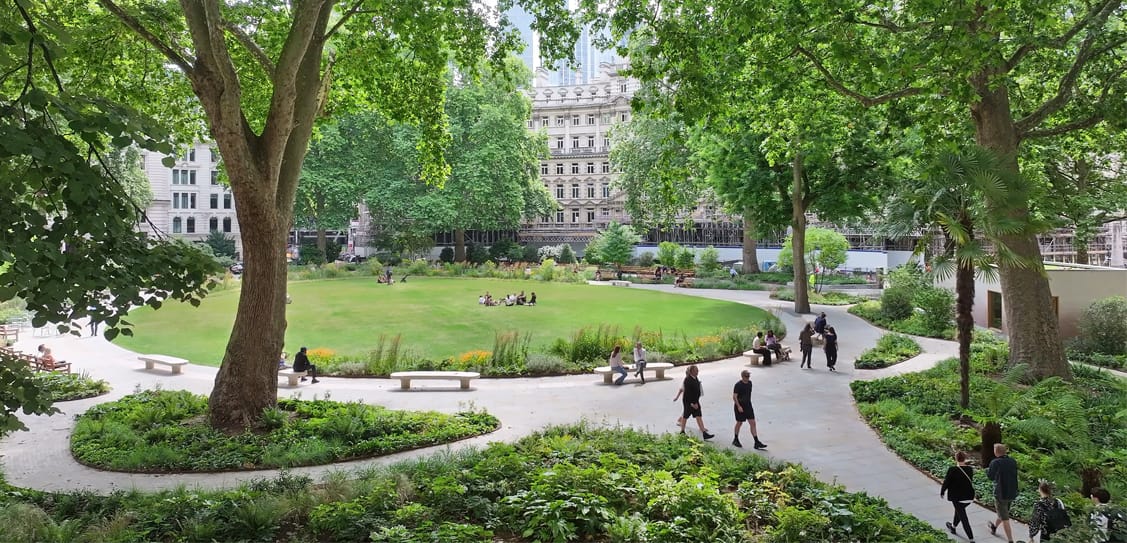
The last thing you expect is to know that one of the Square Mile’s oldest parks to give us a fresh lesson in current public policy. Yet, that is exactly what happened when Finsbury Circus Gardens won Gold in the Public Realm category at the 2026 World Architecture News Awards. The judges praised it as “a beautiful design that retains the original spirit of the square with a contemporary and nature-based approach.” This is polite language for something far more interesting. The City of London has shown that the public realm can combine elements of conscious heritage as well as being future-oriented.
This shift matters because too much public space policy in Central London still swings between two weak extremes. They are preservation that fossilises place, or glossy redesign that mistakes novelty for value. Finsbury Circus Gardens, which is London’s oldest public park and the largest green space in the Square Mile, took a different route after years of disruption from Liverpool Street’s Crossrail works. The redesign enlarged and revitalised the central lawn, improved seating and accessibility. And, introduced new landscaping intended to boost biodiversity, while still respecting the Grade II-listed historic setting.
The deeper pattern here is that councils across London should study carefully. This was not simply a beautification project for office workers with Pret food in hand. The City of London Corporation explicitly framed the gardens as a “green haven” and “urban oasis accessible to all,” Their vision ties together climate resilience, mental wellbeing, civic identity and everyday usability in one site. That is what smart local policy looks like now. Gone are the days of separate silos for environment, culture, accessibility and economic appeal. They are replaced by public spaces that do all four at once.
There is also a quiet political message in the timing. After more than a decade in which much of the site was swallowed by infrastructure works, reopening the gardens in 2025 and then winning major recognition in 2026 suggests that long-delayed public realm projects can still come back stronger, if councils stay ambitious about design quality. Since entering this century, our city has been awash with urban regeneration where building sites and cranes often get more attention than benches, planting or pathways. Finsbury Circus Gardens is a reminder that civic prestige is not built by towers alone. Sometimes it is won by giving people a better place to sit, breathe and feel the city belongs to them too.
Find out more here - https://www.cityoflondon.gov.uk
CITY PALETTE
The Exhibition Built From What We Left Behind
©Prazzle Arts
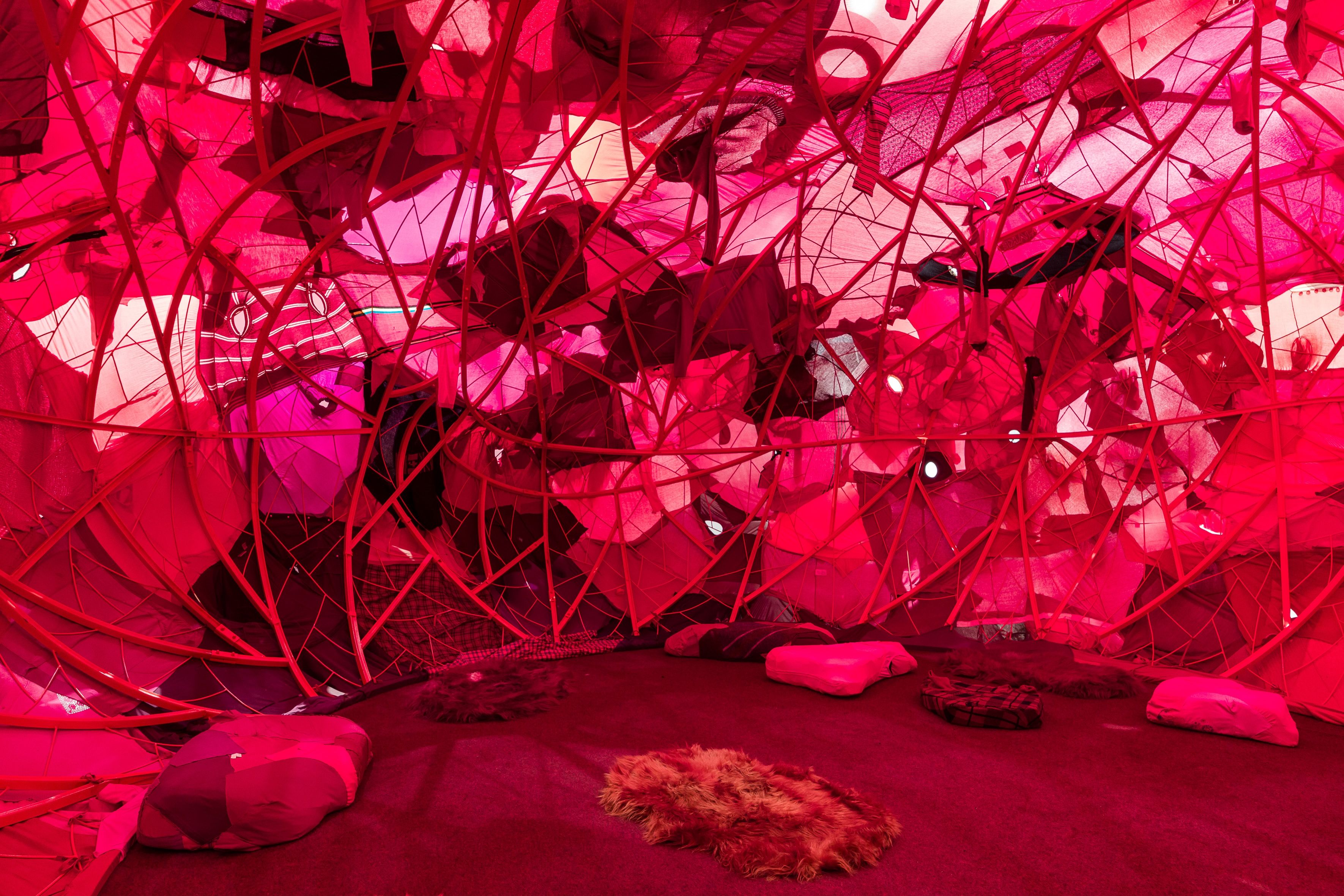
Walking into Yin Xiuzhen: Heart to Heart, the last thing you expect to feel is emotionally charged by seeing secondhand clothing, concrete and household leftovers. Yet, this is exactly what happens once inside the Hayward Gallery, where the exhibition runs until May 3 2026. Those everyday materials are transformed into immersive sculptures and installations that turn memory, migration and globalisation into something you can almost physically step inside.
What makes this such a compelling display is the way Yin shifts the ground beneath familiar objects. This is the first major UK survey of her work, drawing on more than 30 years of practice and combining seminal projects with new commissions. All of them built from materials that already carry human use, wear and residue. Rather than chasing pristine spectacle, Yin gives us something more intimate and more unsettling. A reminder that the things we throw away often hold the deepest evidence of how we have lived.
The standout thread is the exhibition’s meditation on connection. One new commission, A Heart to Heart (2025), uses a monumental heart-shaped structure and mirrored reflections to explore the Chinese concept of xin. A connection where emotion and thought are understood as intertwined rather than separate. That philosophical layer gives the show unusual depth, because Yin is not merely presenting recycled matter as eco-art. She is asking how inner life, public life and cultural identity are constantly stitched together, then reshaped by time.
This is the kind of exhibition that rewards both curiosity and patience. It sits beautifully alongside Chiharu Shiota’s concurrent Hayward show, and one ticket covers both. But Yin’s work has its own slower, more reflective force, that invites you to pause inside cities made from fabric, organs made from used garments, and objects made strange by memory. There are times that we mistake the new for the meaningful, but Heart to Heart suggests something wiser. The most resonant stories are sometimes already worn into the material around us.
Books tickets here - https://www.southbankcentre.co.uk
Waterloo's Wildly Underrated Cultural Powerhouse
©Morley College
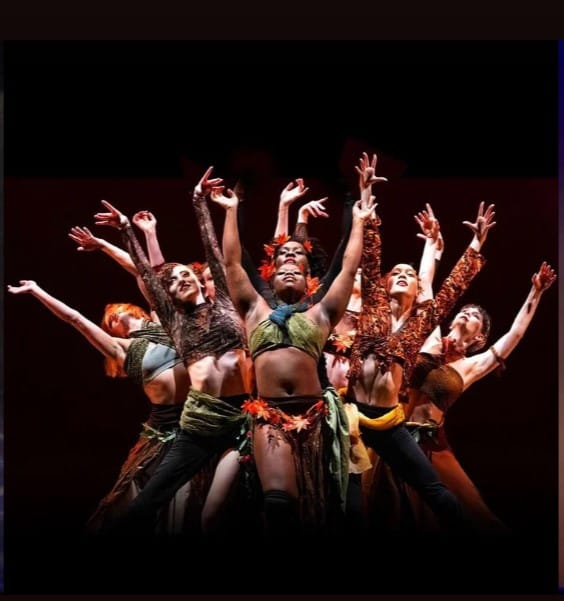
Not every great festival arrives with corporate banners and a queue for overpriced spritzes. The Performers of Morley Festival, at Morley College’s Waterloo Centre, offers something more substantial. A vibrant showcase of music, dance, drama and public conversation, all meet under one roof. The performers range from established names to tutors, alumni and current students. BAFTA-nominated actor Johnny Harris returns to his alma mater for a screen acting masterclass. While broadcaster Angela Rippon, writer Tim Benzie and London historian Jack Chesher bring very different energies to the festival’s Penny Lectures.
Collectively, they revive a Morley tradition that stretches back to 1882. Around them, the programme moves confidently from the Morley Chamber Orchestra playing Mozart and Mendelssohn to jazz celebrations with the Morley Big Band, a piano masterclass with Nikos Stavlas, and dance from Body of People. There is even a performance by Selfish Jean, Morley’s first rock band.
The eclectic range is precisely the point. Too often, creative expressions split neatly between elite institutions and grassroots venues. But Morley sits in the much more interesting middle ground where access and quality are not enemies. Delight in free lunchtime classical concerts, a learn-to-DJ workshop, sound art in the restored Emma Cons Hall. Alongside, opera scenes with ghosts and supernatural themes, and live broadcasts on Morley Radio. They all suggest a festival designed not just to entertain, but to widen the door into performance culture.
Through a curator’s lens, Morley’s real strength is that it treats cultural participation as a living ecosystem rather than a finished product. You are not simply watching polished talent descend from above. You are seeing how a city sustains performers across generations, disciplines and confidence levels, from beginners to professionals. The current creative climate tends to over-reward hype, so the Performers of Morley Festival is a refreshing break from this. It reminds us that some of our city’s vital cultural energy is still being built in classrooms, rehearsal rooms and community stages just a short walk from Waterloo station.
Find out more here - https://www.morleycollege.ac.uk
UNDISCOVERED GEMS
The Archive That Will Break Your Heart

©London Borough of Richmond
If your image of The National Archives is all about state papers, royal seals and bureaucratic gravity, think again. Because this time it brings you emotional shrapnel in the form of, Love Letters. Browse this world of intimacy that stretches back more than 500 years of devotion, longing, sacrifice and heartbreak. This free exhibition that runs until April 12 feels less like a history lesson and more like eavesdropping on the private pulse of the nation.
These are deeply personal feelings preserved inside a public institution built to hold the machinery of government. The exhibition ranges across royalty, parliamentarians, literary figures and unknown writers. And, it expands the very idea of a love letter by including poems, drawings, wills and memorials alongside more traditional exchanges. In curatorial terms, that is the clever move, because it turns “love” from a sentimental theme into a wider story about power, distance, secrecy, duty and desire.
There is also something distinctly timely about it. In an age of disappearing texts, read receipts and algorithmic romance, Love Letters reminds you that intimacy once travelled slowly, physically and often at enormous personal cost. Some of the material touches forbidden relationships, wartime separation, same-sex longing and life-changing declarations. All showing how private emotion has repeatedly collided with public consequence, sometimes tenderly and sometimes catastrophically.
For our cultural city, this is the type of programming we need more of that is accessible, emotionally intelligent and quietly revelatory. Richmond residents get a show that is free, historically rich and unusually human. While visitors get the rare pleasure of leaving an archive feeling less informed in the dry academic sense and more connected to the mess, bravery and vulnerability of other people’s lives. If you go before it closes on April 12, do not expect a grand spectacle. Something better is waiting for you. A whisper from the past that somehow lands right in the middle of the present.
Find out more here - https://www.nationalarchives.gov.uk
LONDON BUZZ
Frida Is Coming and She Means Business

©Tate Modern
By late June, Tate Modern will not simply be staging another blockbuster, it will be opening a cultural conversation London is more than ready for. Frida: The Making of an Icon opens the summer on June 25 and runs through until January 3 2027. This cultural collection brings together over 130 works, photographs, documents and personal artefacts. Collectively, they trace how Frida Kahlo became not just a major artist, but one of the most claimed, remixed and emotionally loaded figures in global culture.
The question that permeates the works is how did she construct identity through image, dress, politics and self-mythology? While also showing how later generations of artists across Mexico, the Americas and Europe have responded to her ideas around gender, disability, the body and power. So, you can see the weight of her offerings move beyond the idea of coming to the exhibition to just admire paintings, even the rarely seen self-portraits.
All of this matters because Frida has become one of those rare figures who exists in two worlds at once. Namely, serious art history and mass-market iconography. She is everywhere from tote bags to beauty palettes. Yet, Tate is clearly trying to pull her back from merchandising flatness and return her to complexity, contradiction and influence. In a city obsessed with image-making, that tension feels especially sharp, because Frida understood long before Instagram that style can be both armour and message.
From the perspective of a public cultural event, this looks set to be one of London’s defining exhibitions of the year. It has the blockbuster ingredients, major loans, international context and cross-generational appeal. But it also has something rarer, the chance to move beyond fandom into a richer understanding of why Frida still matters so deeply to so many. Ranging from feminists, LGBTQ+ communities, disability activists and artists worldwide. When the doors open on Bankside in June, you will encounter hoards of people and a show that asks a more interesting question than “why do we love Frida?” It asks how an artist turns herself into a language the world keeps using.
Book tickets here - https://www.tate.org.uk
LONDON SOUNDSCAPE
Fox and Firkin - March 19
Lewisham is about to get drenched in velvet soul when Omar returns to the Fox & Firkin. You are not just seeing a beloved homegrown legend, but catching an artist celebrating 40 years of recording with the kind of voice that can turn intimacy, groove and wisdom into one seamless thing. With his latest album Brighter the Days in the mix and a catalogue that has long floated beyond neat labels like neo-soul or acid jazz. This promises warmth rather than nostalgia. So, if you are looking for a grown, classy night out, this looks spot on.
Book tickets here - https://foxfirkin.com
Jazz Cafe - March 19
Camden is set to glow with Caribbean heat when Havana Música lands at The Jazz Cafe and they invite you into a full-blooded celebration of Cuban music. Enjoy rhythm, brass, percussion and irresistible swing that moves you from being an attentive listener to hitting the dancefloor. Jazz Cafe’s intimate layout only sharpens that charge, by giving every beat a close-up pulse. If you love nights that feel both musically rich and joyfully festive, this promises to be the kind of show that can lift you off your seat.
Book tickets here - https://thejazzcafe.com
Next Door Records - March 19
Some gigs feel less like a booking and more like a secret passed across a record-shop counter. Love Cloud at Next Door Records has exactly that allure of being intimate, low-cost and close enough to the stage for every lyric, groove and glance to land properly. You are not buying into all that comes with a vast arena. Instead, you are stepping into one of West London’s warmest neighbourhood venues, a space known for natural wine, vinyl culture and an unforced sense of musical discovery. For less than £5, this looks like the kind of evening that rewards you for following your instinct over hype.
Book tickets here - https://www.nextdoorrecords.co.uk
Ronnie Scott’s - March 14
Silken guitar lines and serious jazz pedigree are heading for Soho when Lee Ritenour takes the stage. This is your night to sit in front of one of modern jazz guitar’s defining figures. Lee is a Grammy-winning player whose career has moved effortlessly through fusion, bossa nova, blues and pop over five decades. In Ronnie’s close-up setting, every fluid phrase and rhythmic twist should land with extra finesse. If you like your virtuosity warm rather than showy, this is the kind of Saturday night you will love.
Book tickets here - https://www.ronniescotts.co.uk
Rough Trade East - March 20
Brick Lane gets softer and more soulful when Ego Ella May strips things back for an acoustic set and signing in Brick Lane. You are heading into a close-range performance to soak up her honeyed voice, jazz-inflected phrasing and emotional precision that teaches you how to breathe. Timed with the release of her second album Good Intentions, the evening carries that extra charge of first-hear intimacy, part concert, part celebration, part conversation between artist and audience. If you like your R&B thoughtful, tender and grown, this looks like a quietly special night out.
Book tickets here - https://www.roughtrade.com/en-gb
Southbank Centre - March 20
A warm gospel breeze is about to blow straight through the Royal Festival Hall when the London African Gospel Choir reimagines Paul Simon’s Graceland on March 20. This joyful, full-bodied celebration marks the album’s 40th anniversary. The Choir’s rich harmonies and uplifting energy gives classics like Diamonds on the Soles of Her Shoes and You Can Call Me Al, a fresh emotional lift.
Book tickets here - https://www.southbankcentre.co.uk
The Blues Kitchen Brixton - March 20
There are albums you listen to, and then there are albums you seem to drift around inside. This Blond 10th-anniversary night at The Blues Kitchen Brixton promises exactly that kind of immersive pull, with a live gospel choir adding extra lift, ache and warmth to Frank Ocean’s most intimate songs. Lean into the emotion rather than the spectacle, turning tracks shaped by heartbreak, memory and quiet revelation into something communal and full-bodied. If you love soulful reinterpretations with atmosphere, tenderness and a little late-night magic, this looks irresistible.
Book tickets here - https://theblueskitchen.com
Vortex Jazz Club - March 16
Hackney gets a jolt of fresh jazz energy when Guildhall’s Upstairs & Downstairs Showcase takes over the Vortex from mid-afternoon into the evening. This is an immersive, rolling feast of emerging players and ensembles shaped by top tutors including Tony Kofi, Fini Bearman, Ivo Neame and Robert Mitchell. That makes this less a gig and more a front-row seat to London’s next wave of jazz musicians. At just £10, it is also a beautifully low-risk way to hear ideas forming in real time, inside one of the capital’s most trusted jazz rooms.
Book tickets here - https://www.vortexjazz.co.uk
Wigmore Hall - March 21
Wigmore Hall becomes a musical passport on March 21 when Gweneth Ann Rand and Allyson Devenish lead you through African Songs, a programme shaped by composer Fred Onovwerosuoke’s vivid journey across the continent. This musical passport allows you to step into a rich weave of language, rhythm and storytelling, carried by Gweneth’s sumptuous, expressive soprano and Allyson’s finely tuned piano partnership. If you are craving classical music with colour, curiosity and emotional reach, this promises to be a thoughtful, transporting matinee in one of the city’s most intimate halls.
Book tickets here - https://www.wigmore-hall.org.uk
BUSINESS SCENE
Fashion's Waste Problem Just Met Its Match

©Laundre
Most fashion businesses talk a good sustainability game, but in East London, LaundRe has built something far harder to fake. They have cracked the infrastructure code. Based in Canning Town, the company has positioned itself as the UK’s low-impact denim finishing hub, helping brands rework unsold jeans and denim waste locally. Rather than defaulting to the usual cycle of markdowns, write-offs, or long-haul reprocessing. That makes LaundRe less of a trendy green startup and more of a timely answer to a stubborn industry problem hiding in plain sight.
What’s clever about the model is that it blends sustainability with operational realism. LaundRe uses laser, ozone and other low-resource finishing technologies to update denim washes and finishes while cutting water, chemicals and energy compared with conventional processing. Thus, giving brands a way to refresh products without starting again from scratch. In a retail market where trend cycles move faster than supply chains, that kind of flexibility matters because it allows businesses to rescue value from stock already sitting in the system.
But, there is a tension because fashion loves to celebrate creativity at the front end, yet it has long treated excess at the back end as someone else’s problem. LaundRe disrupts that logic by bringing reprocessing closer to home, shortening supply loops and making circularity feel less like a lofty brand manifesto and more like a commercial tool. With more than 70 million pairs of jeans sold each year in the UK, the opportunity is definitely beyond niche. It is hiding in warehouses, returning piles and unsold seasonal stock.
Looking ahead, LaundRe’s real significance may be that it points to a different future for British fashion. One built on recovery, reinvention and regional capability rather than endless overproduction. If more brands decide that local reprocessing is faster, smarter and reputationally safer than waste, East London could become a proving ground for a new kind of textile economy. And, that is the twist worth noticing. The most forward-thinking move in denim right now may not be designing the next new jean, but finding a better second life for the ones we already have.
Find out more here - https://www.laundre.co.uk
LINGUISTIC TAPESTRY - WORDS OF THE WEEK
English Word:
Valency
Pronunciation: /’vei.lan.si’/
Definition: In linguistics, valency is the number of grammatical elements that a word, especially a verb, combines with in a sentence. Cambridge similarly defines a verb’s valency as the number of noun phrases with which it combines. Cultural Note: Valency reflects one of language’s quiet structural truths. Words do not merely carry meaning, they create expectations about what must gather around them. In English grammar, it helps explain why some verbs feel complete on their own while others reach outward for objects, complements, or additional participants.
Spanish Word:
Sosiego
Pronunciation: /ˈsɔˈsje.ɣo/
Definition: Calm, serenity, quietness, or inner stillness. The Royal Spanish Academy defines sosiego as “quietud, tranquilidad, serenidad.”
Cultural Note: Sosiego captures a deeply valued Spanish sense of composure. The kind of calm that is emotional as much as physical. It suggests more than silence; it points to a settled state of mind, a release from agitation and a return to balance.
Thank You!
Thanks so much for reading this edition of The London Palette! If you found something useful or interesting, I’d love to hear from you. Just reply to this email.
Plus, share this newsletter with friends and ask them to subscribe here: https://thelondonpalette.beehiiv.com/subscribe.

©BybreenSamuels ©The London Palette